
Why People Use VPNs: Main Motivations in 2026

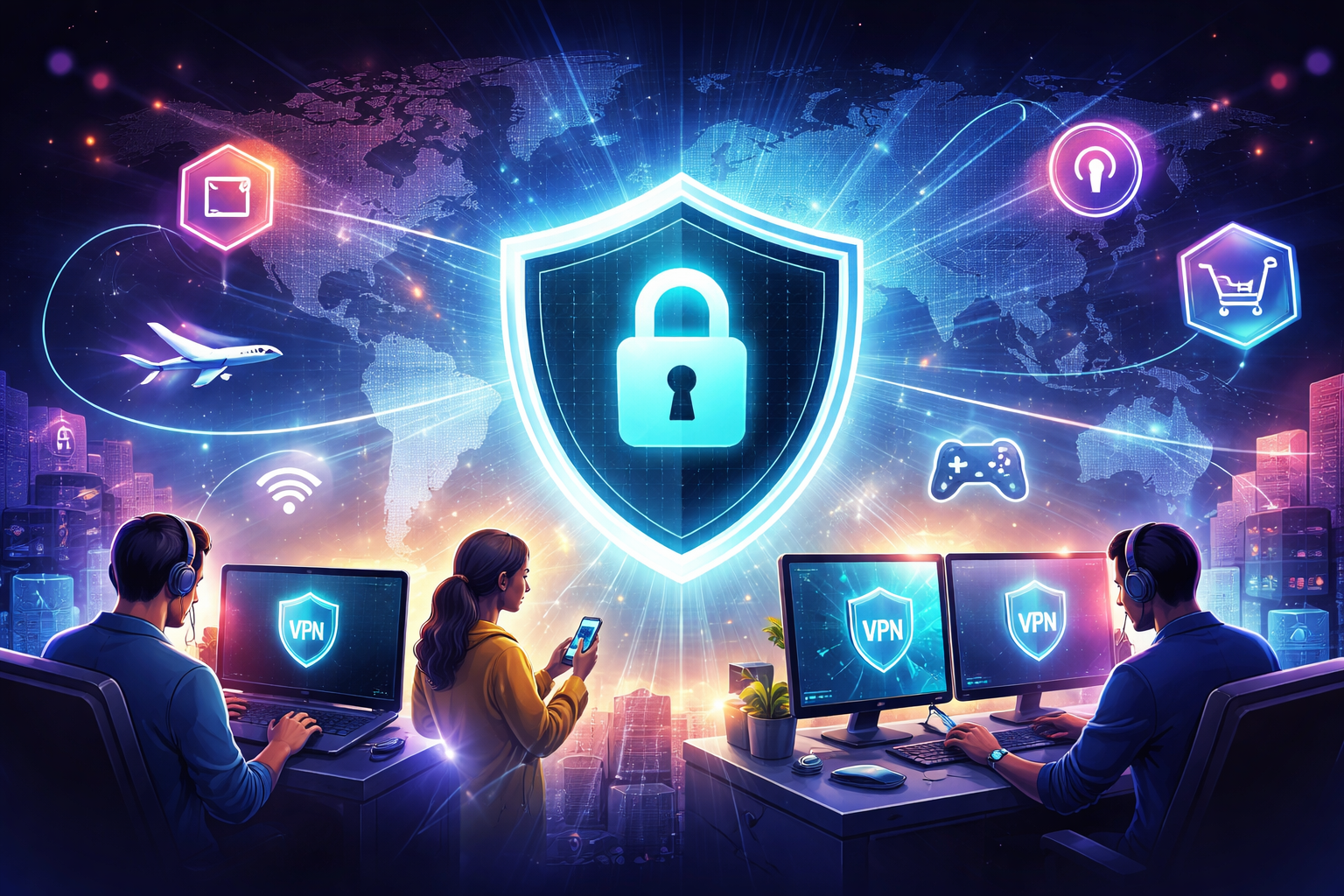
Understanding why people use VPNs in 2026 means recognizing a fundamental shift in how individuals navigate the internet. What was once a niche tool for tech enthusiasts has become an essential layer of digital infrastructure — as common as antivirus software. Today’s internet is more monitored, fragmented, and commercially exploitative than ever before, making VPN adoption not just a preference but a necessity for anyone who values privacy, security, unrestricted access, and digital autonomy. From remote workers and digital nomads to everyday streamers and cost-conscious shoppers, the motivations are as diverse as they are urgent. According to Statista’s global VPN usage data, VPN adoption has surged consistently, driven by evolving threats and tightening internet regulation worldwide.
Rising Privacy Concerns in an AI-Driven Internet
The internet in 2026 is deeply woven with artificial intelligence — and that AI is working overtime to understand you. Every click, scroll, and purchase feeds behavioral models that build increasingly accurate profiles of who you are, what you want, and how you can be monetized. Privacy-conscious users are turning to VPNs as a first line of defense against this invisible surveillance economy. The threat is no longer abstract; it is personalized, persistent, and deeply embedded in platforms users interact with daily.
AI Surveillance, Data Profiling, and Behavioral Tracking
Modern AI systems cross-reference data from dozens of touchpoints — social media activity, purchase history, location data, app usage, and even typing patterns — to build predictive behavioral profiles. Advertisers, data brokers, and even government agencies leverage these profiles. VPNs disrupt this by masking IP addresses and encrypting traffic, making cross-platform tracking significantly harder to execute. In 2026, AI-powered tracking has evolved to include device fingerprinting and biometric inference, raising the stakes considerably.
Protection Against Identity Theft and Data Exploitation
Data breaches affect hundreds of millions of users each year. VPNs add a critical layer of encryption that protects sensitive information from interception. Key data types users actively shield include:
- Financial credentials — banking logins, card details, crypto wallet keys
- Personal identification — passport scans, national IDs, social security numbers
- Medical records — health data increasingly targeted for insurance fraud
- Login credentials — email, social media, and enterprise platform passwords
- Location history — real-time and historical movement data
Secure Browsing on Public, Smart, and IoT Networks
Public and shared networks remain among the most exploited attack surfaces in cybersecurity. As smart home ecosystems and IoT devices proliferate, the attack surface has expanded well beyond coffee shop Wi-Fi. Whether booking a hotel on a shared airport network or managing a smart thermostat, unprotected connections expose users to significant risk.
Risks of Public Wi-Fi and Smart Devices
Open networks are prime targets for man-in-the-middle attacks, packet sniffing, and evil twin hotspots. In 2026, even smart TVs, connected appliances, and home hubs have become attack vectors. IoT devices often ship with minimal security, and when joined to the same network as sensitive devices, they create exploitable pathways.
End-to-End Encryption and Data Shielding
A quality VPN routes all traffic through an encrypted tunnel, neutralizing interception attempts across every connected device on a network. Modern VPN protocols like WireGuard and OpenVPN provide robust encryption without significant performance penalties.
| Scenario | Without VPN | With VPN |
|---|---|---|
| Public Wi-Fi usage | Traffic visible to network admins and sniffers | Fully encrypted, unreadable to third parties |
| IoT device communication | Data sent in plain text, exploitable | Routed through encrypted tunnel |
| Smart home hub activity | Behavior patterns exposed to ISP | Activity masked and anonymized |
| Hotel/airport network | Susceptible to evil twin attacks | Protected against network-level threats |
Bypassing Geo-Restrictions in a Fragmented Internet
The global internet is no longer uniform. Licensing agreements, government mandates, and corporate decisions have carved the web into regional silos, where the content available in one country is entirely inaccessible in another. Geo-restriction circumvention remains one of the top reasons users adopt VPNs in 2026. Content fragmentation has intensified as major media conglomerates tighten regional licensing deals.
Streaming Platforms and Regional Content Silos
Netflix, Disney+, Amazon Prime, and regional streaming services each maintain distinct content libraries per country. A show available in the UK may be absent from the US catalog, and vice versa. Users utilize VPNs to access the most complete libraries available globally. Content categories commonly unlocked include:
- International film and television series
- Sports broadcasts and live events
- Music streaming libraries
- News platforms restricted in certain regions
- Educational content and academic video archives
Accessing Restricted Apps and Services Worldwide
Beyond entertainment, many productivity and communication tools are geographically restricted. VoIP services, messaging platforms, and even business software may be blocked in certain markets, making VPNs indispensable for global professionals.
Remote Work, Freelancing, and Digital Nomad Security
Hybrid and fully remote work models are now standard in 2026. Teams are distributed across continents, and the security perimeter of any organization now extends to wherever its employees happen to be working. VPNs bridge these distributed environments securely, and adoption is as strong at the enterprise level as it is among individual freelancers. The digital nomad population continues to grow, creating a large segment of users who depend on VPNs daily.
Secure Access to Distributed Work Environments
Corporate intranets, cloud storage, development environments, and internal communication tools all require authenticated, encrypted access. VPNs allow employees to securely connect to these systems from any location without exposing sensitive endpoints.
Protecting Client Data and Communications
Freelancers and consultants handling confidential client information — contracts, financial records, creative assets — depend on VPNs to ensure that client data remains protected across international borders, especially in regions with weak data protection laws.
| Use Case | Personal VPN | Enterprise VPN |
|---|---|---|
| Primary purpose | Privacy and content access | Secure corporate network access |
| Managed by | Individual user | IT department or MSP |
| Authentication | Username and password | Multi-factor + certificate-based |
| Typical protocols | WireGuard, OpenVPN | IPSec, SSL/TLS, Zero Trust |
Online Freedom and Increasing Internet Censorship
Across dozens of countries, internet censorship has expanded significantly, with governments restricting access to news platforms, social media, and communication tools. In 2026, this is no longer a problem confined to authoritarian regimes — democratic governments have also introduced digital gatekeeping measures under the banner of content regulation and national security. Users in these environments rely on VPNs to reclaim open access to information.
Circumventing Government Firewalls and Restrictions
Common censorship scenarios users face in 2026 include:
- Social media platforms blocked during political unrest or elections
- News websites restricted to suppress independent journalism
- VoIP and messaging app bans protecting state-controlled telecom monopolies
- Search engine filtering removing politically sensitive results
- Blocking of foreign streaming services deemed culturally incompatible
- Restrictions on cryptocurrency exchanges and fintech platforms
Preserving Digital Rights and Free Expression
In 2026, internet freedom is recognized as a fundamental right by international digital rights organizations. VPNs serve as one of the most accessible and effective tools for individuals to exercise that right under hostile regulatory conditions.
Smart Savings: Using VPNs for Better Prices Online
Dynamic pricing algorithms have become extraordinarily sophisticated. In 2026, AI-driven pricing engines adjust costs in real time based on a user’s location, browsing history, device type, and even the time of day. Savvy consumers have discovered that switching their apparent location via VPN can yield meaningful financial benefits across multiple categories of online spending.
AI-Based Price Personalization
Major e-commerce platforms, airline booking systems, and subscription services now deploy personalized pricing models that serve different price points to different users based on perceived willingness to pay. A user in a high-income country may see prices 20–40% higher than someone browsing from a lower-cost market.
Unlocking Cheaper Subscriptions and Deals
VPN-savvy users regularly save money on:
- Software subscriptions (Adobe, Microsoft 365, antivirus tools)
- Streaming platform annual plans
- Flight tickets and hotel bookings
- Online gaming purchases and in-game content
- Academic journal and research database access
Gaming, Streaming, and Performance Optimization
The entertainment use case for VPNs has matured well beyond basic geo-unblocking. In 2026, gamers and streamers rely on VPNs to optimize connection quality, avoid throttling, and access content ahead of regional release schedules. ISP-level bandwidth management has become more aggressive, making VPN-based performance optimization increasingly relevant.
Avoiding Throttling and Improving Stability
Internet service providers routinely throttle bandwidth for streaming and gaming traffic during peak hours. A VPN obscures the nature of the traffic from the ISP, effectively bypassing throttling policies and restoring full bandwidth allocation for high-demand activities.
Accessing Global Servers and Early Releases
Gamers use VPNs to connect to servers in other regions for lower latency on specific titles, access early game releases in Asian or Pacific markets, and participate in region-exclusive beta tests.
| Benefit | Without VPN | With VPN |
|---|---|---|
| ISP throttling | Bandwidth reduced during peak hours | Traffic type hidden, throttling bypassed |
| Content access | Limited to regional library | Access to global catalogs and early releases |
| DDoS protection (gaming) | IP exposed to other players | Real IP masked, attack surface reduced |
| Latency optimization | Routed through default ISP path | Can select optimal server routes |
Conclusion
In 2026, the question is no longer why people use VPNs — it’s how they could afford not to. From shielding personal data against AI-powered surveillance and securing communications on distributed work networks, to bypassing geo-restrictions, censorship, and inflated pricing, VPN motivations are deeply practical and wide-ranging. Privacy, security, access, cost optimization, and digital freedom are not abstract ideals — they are daily requirements for anyone who lives, works, or plays online. As digital threats grow more intelligent and regulations more restrictive, the VPN has firmly established itself as one of the essential tools of modern internet life.